The recipe looks sensible: export a contact list from Apollo or a similar tool, hand an AI a template, and let it "personalize" each email with the company name, the title and a couple of lines from the website. By evening you have thousands of emails that look handwritten.
The problem is that your recipient receives thousands of those emails too. And spots them in a second.
What that personalization looks like
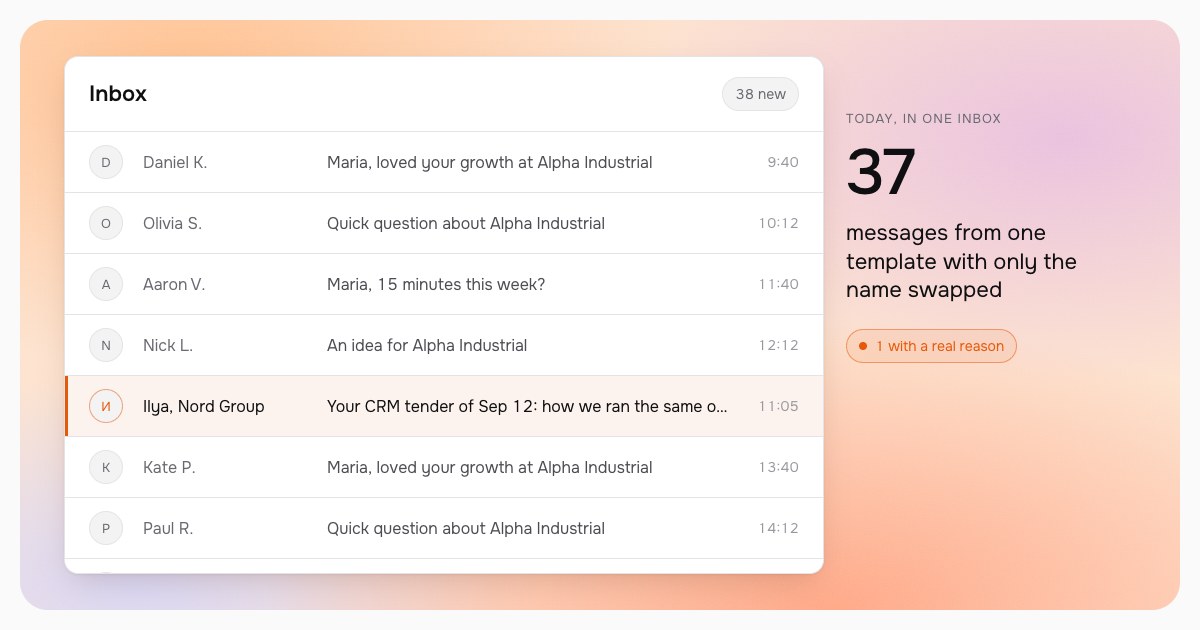
"Hi John! I see that Company N is growing fast in logistics. We help logistics companies…"
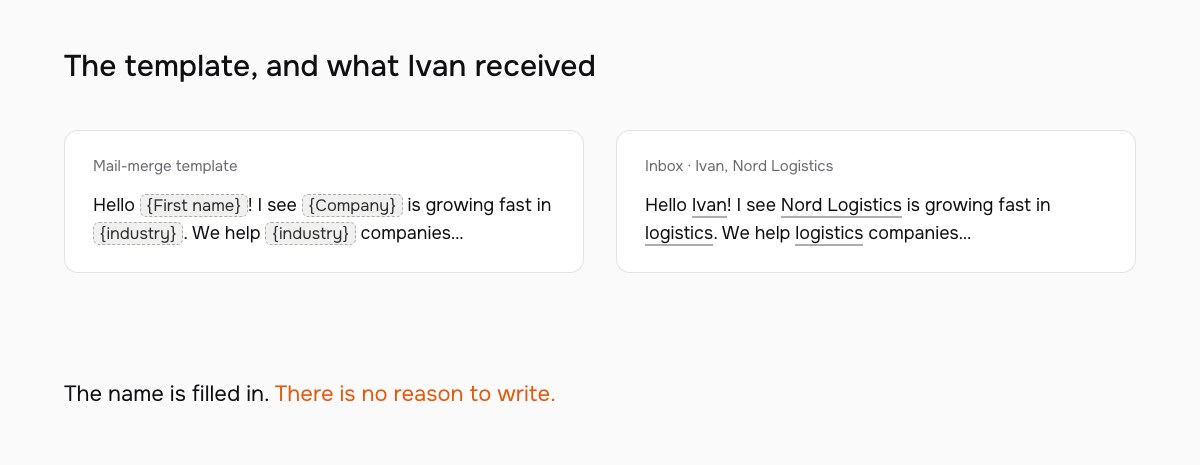
Nothing in the email could not be said to any other logistics company. The name is filled in, but there is no reason to write. It is the same spam with a name in the first line.
Look at it from the decision maker's side
Picture the sales director of a mid-size company. Their day is booked with meetings: the morning stand-up, calls with key accounts, budget reviews, interviews. Email and DMs get handled in gaps: between meetings, in a taxi, in the evening.
Dozens of people write to them every day, and most of them are selling. Integrators, agencies, lead-generation services, "revenue growth experts". They all found this person in the same database, and many use the same tools for "personalization".
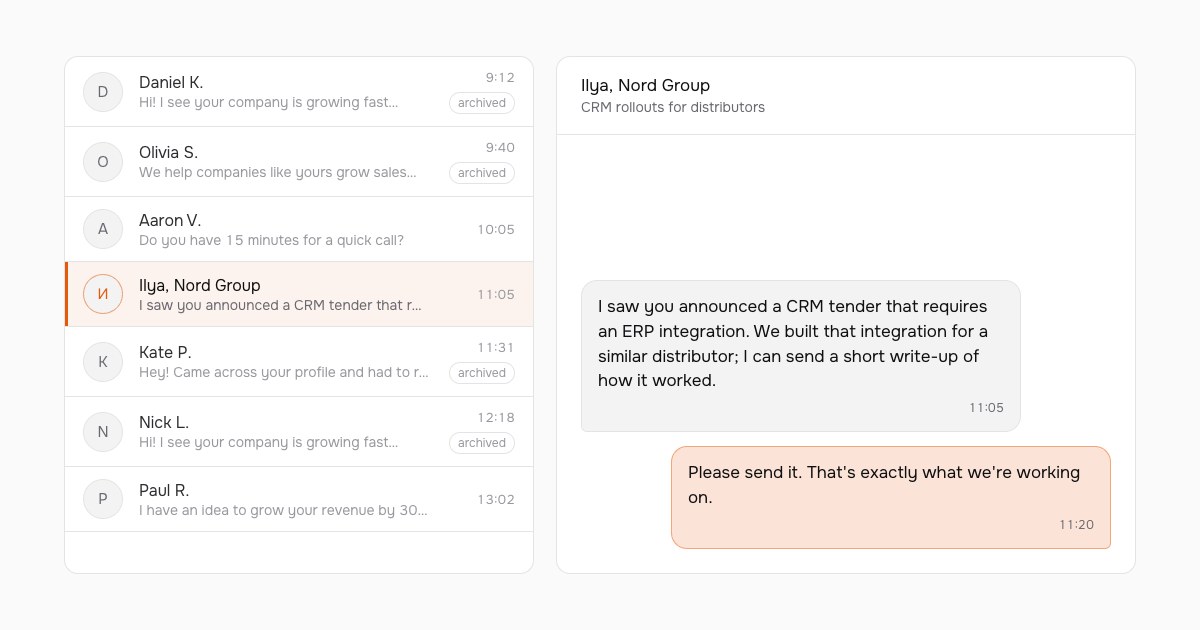
Then they open one more message:
"Hi! I see your company is growing fast. We help companies like yours increase sales. Do you have 15 minutes for a call?"
What do they think at that moment? Not "interesting offer", but "another one". They saw the same text this morning from someone else, with a different company name. They have neither the time nor a reason to reply. The message gets archived, the sender often gets marked as spam or blocked, and the next email from that domain never reaches them.
Now a different message:
"I saw you announced a CRM tender, and the brief requires an integration with your ERP. We built that integration for a similar distributor and can send a short write-up of how it worked."
It is about their problem this week. It could not have been sent to a hundred other people. Messages like that get answers because they save time instead of taking it.
The difference between these two messages is not the wording. It is the research done before anyone started writing.
Why it does not work
No reason to write. A good email answers "why am I writing to you now". An export does not know what happened at the company last week: a tender, a new leader, a sales team being hired. Without that, an AI can only paraphrase the About page.
The wrong person. Lists go stale: people change jobs, titles get renamed, and a title does not tell you the role in a purchase. The email goes to the CEO when the chief engineer decides, or to someone who left six months ago.
The same wording. Without facts an AI writes similar text for everyone. With a dozen of those a day in the inbox, they blur into one template.
Deliverability. Mass sends to an unverified list with look-alike copy quickly damage your domain's reputation, and then your good emails land in spam too.
What sets apart an email people read
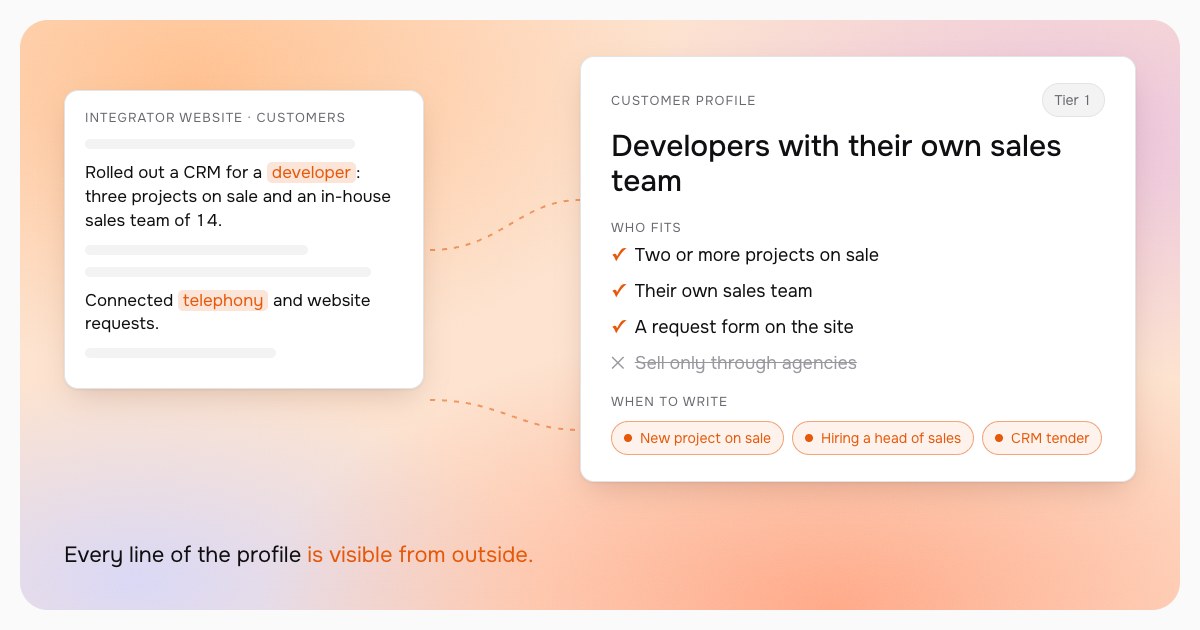
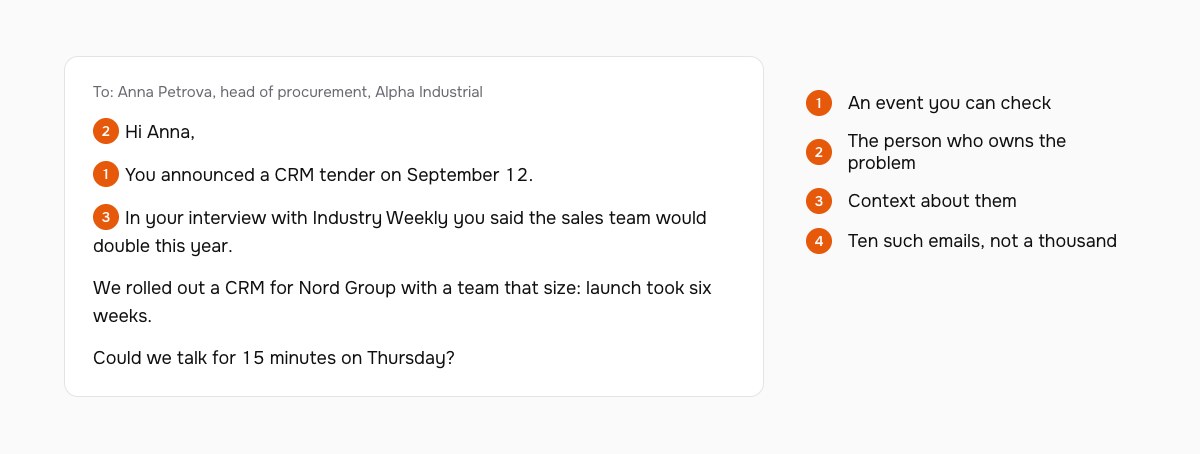
- An event. "You announced a CRM tender last week", "You have a new sales director", "You are opening a warehouse in Almaty". An event can be checked, and it makes the email timely.
- The right person. Whoever owns the problem you solve, with a title confirmed by recent sources.
- Context about the person. A talk, an interview or a post you can refer to.
- Small volume. Ten emails with a reason start more conversations than a thousand without one.
Where AI fits
AI helps a lot with writing when it has facts: the event, the person's role, what they have said in public. Without facts it neatly packages nothing. So start with research, not with the email template.
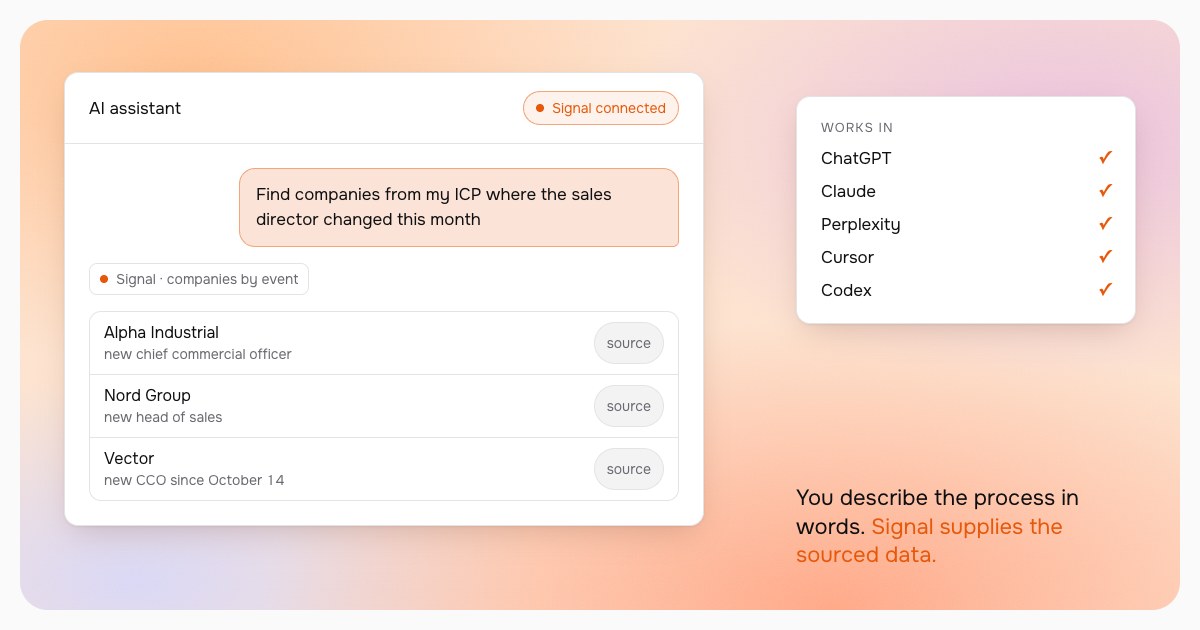
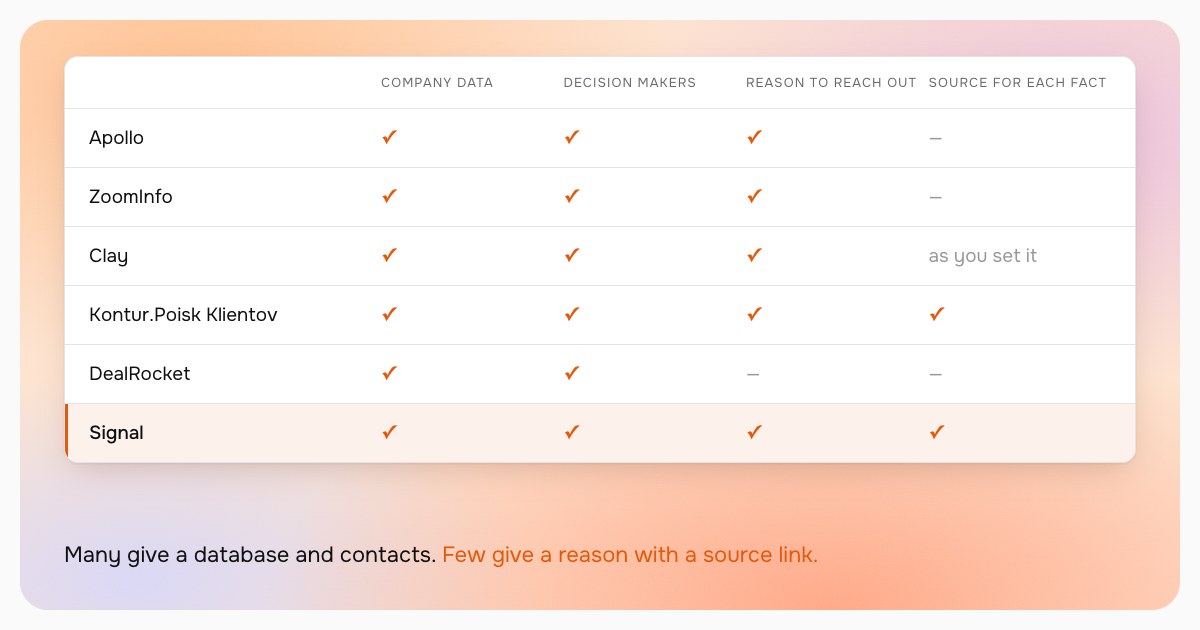
That research is what Signal does: it finds the companies where the event you care about happened, works out who decides there and gathers their public profiles, with a source link for every fact. The email can then be written by you or with AI, but it will be an email with a reason.